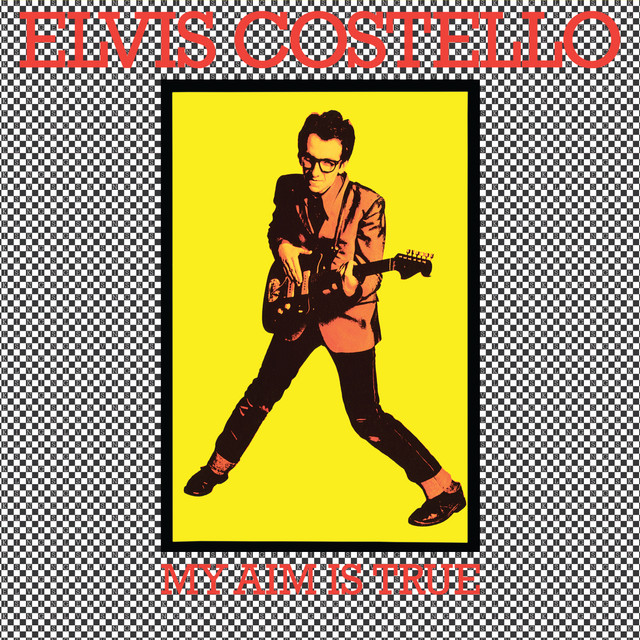
Juggling a day job as a data clerk at Elizabeth Arden, Elvis Costello squeezed recording sessions for My Aim Is True into six four-hour sessions, tracked on a shoestring budget with little time for polish. The urgency bleeds through in every note. Backed by the American country-rock band Clover—who were blissfully unaware of the sardonic British wit they were helping to deliver—Costello laid down his vocals and guitar in single takes, skipping the refinements of overdubs in favor of something rawer. There’s a certain scrappiness to My Aim Is True that feels like eavesdropping on an artist clawing his way out of anonymity and working through his songs in real-time in his bedroom before they are shaped into their final form.
That “quasi demo tape” approach is certainly a part of the charm. It also helps that Costello explored a wide array of musical styles on the album. My Aim Is True sort of sits at the uneasy intersection of the late ’70s punk movement and the cleaner melodic instincts of 1960’s rock and roll. But while many of his peers were content to sneer, Costello focused on melody as much as attitude. His songwriting had more in common with Buddy Holly and Burt Bacharach than the Sex Pistols, but the venom in his lyrics was unmistakable. Costello would later say the songs were written purely out of “revenge and guilt” and you can certainly hear it in the bitter turns of phrase and the constant push-pull between yearning and disdain that underscores his frustration with being an outsider in modern society. . Whether portraying himself as the jilted lover or the societal misfit, Costello channels the outsider’s voice with surgical precision. You can’t help but bob your head along the way.
Standout Songs: “Welcome to the Working Week”, “Alison”, “Waiting For The End Of The World”, “Miracle Man”