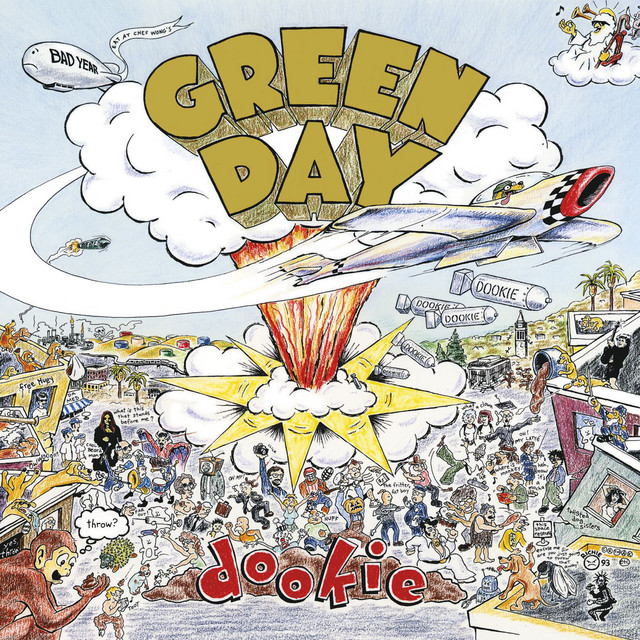
In 1994 Green Day’s Dookie exploded onto the music scene like explosives duct-taped to someone’s spine (yes that is a “Having A Blast” reference), vaulting the band into the mainstream. They were born in the gritty punk clubs of California’s East Bay right up the road from me, in an underground scene where DIY ethics were everything and defined how much cred you had locally. Venues like 924 Gilman Street, an all-ages punk club in Berkeley, were the stomping grounds for Billie Joe Armstrong, Mike Dirnt, and Tré Cool—a place where they honed the infectious hooks and in-your-face energy that eventually turned them into global superstars. And although they faced significant backlash for signing with a major label (backlash that ironically got them banned from 924 Gillman), when Dookie dropped it was clear that Green Day had made the right choice.
It’s hard to fully estimate how many times I’ve listened to this album in full– my best guess is over 200 times (not an exaggeration). When I was in middle school my buddy Nick and I would spend after-school hours and entire weekends skating around our hometown, boombox in tow, and by and large Dookie was our soundtrack. Songs like “Basket Case” and “When I Come Around” became anthems for us, the soundtrack to Sunday skate parks and shit-eating grins. And that obsession mirrored what was happening in the pop culture around us– all of a sudden skate punk was on MTV and radio stations everywhere. Green Day had tapped into the frustration, humor, and restlessness of young people like us who felt lost in the soft tissue of suburban life, kids who were relatively comfortable and safe but wanted an outlet to explore what it felt like to feel dangerous. The album’s bratty, sarcastic lyrics were full of observations on anxiety, boredom, and youthful confusion– this was our gateway album, paving the way for the punk-pop explosion that would follow and consume us in later years. It spoke to us in a way no record had really done before.
What makes Dookie so timeless is its mix of biting wit, undeniable hooks, and driving, punchy sound. The album’s production, handled by Rob Cavallo and the absolutely legendary Jerry Finn (RIP), gave Green Day a more polished edge while preserving the rawness of their sound. Armstrong’s power-chord riffs are simple but addictively catchy, with Dirnt’s basslines and Cool’s drumming providing a bouncy backbone that turns three-minute tracks into bursts of pure energy. Every song feels tight, energetic, and effortless, blending the speed of punk with the infectiousness of pop. Thirty years on, Dookie remains a testament to the power of a few chords, a lot of attitude, and the right dose of irreverence—an album that captures the spirit of my youthful escapades, with the perfect mix of melody and mayhem that keep it fresh every time I put it on.
Standout Songs: “Burnout”, “Longview”, “Welcome To Paradise”, “Basket Case”, “She”, “Sassafras Roots”, “When I Come Around”, “Coming Clean”, “F.O.D.”